Veronique Chen
Veronique Chen
Contemporary Practices I: Emerging Practices in Contemporary Art and Jewellery
Forum | Invited Speaker
28 February 2026
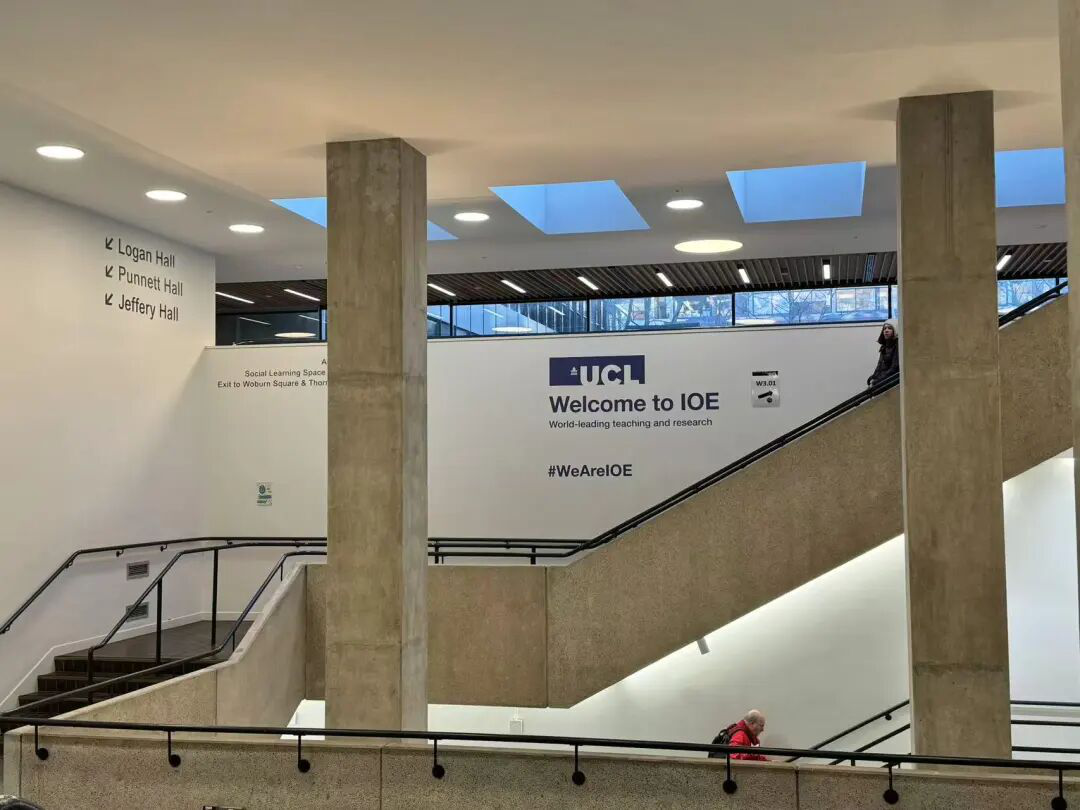
UCL Institute of Education (IOE), Elvin Hall, London
A cross-disciplinary forum exploring material, the body and cultural context. In the roundtable, I drew on food-based projects, craft collaborations and international residencies in rural China to consider how cross-cultural curating can move beyond cultural representation towards a working method grounded in shared experience, collaboration and situated practice.
%2C%20Elvin%20Hall.png)
%20and%20Deputy%20Director%20of%20the%20IOE%20Confucius%20Institute.png)


Forum Overview
Contemporary Practices I: Emerging Practices in Contemporary Art and Jewellery took place at the UCL Institute of Education (IOE) on 28 February 2026. Organised by the Asian Academy of Arts, it was the first event in the Academy’s Contemporary Practices Forum Series.
The forum brought together artists, curators, researchers and students to discuss how contemporary art and jewellery engage with material, the body and cultural context, with particular attention to emerging practices within global and cross-cultural conditions.
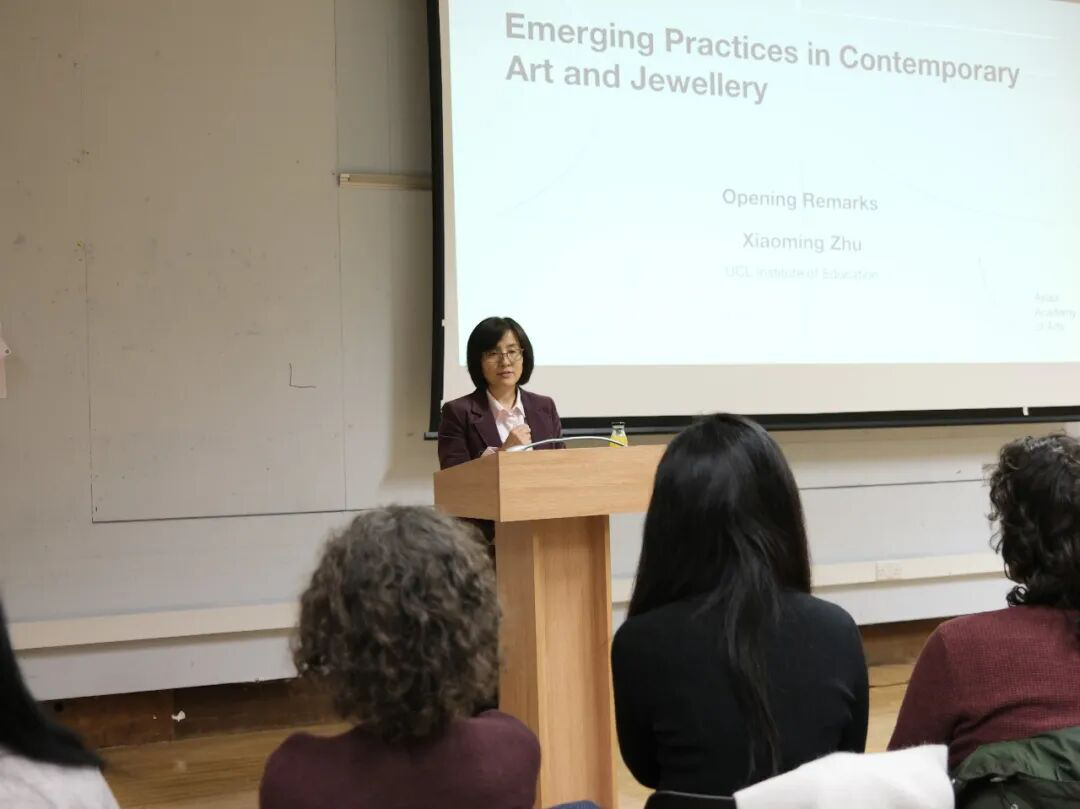
The event opened with remarks by Xiaoming Zhu, Lecturer at the UCL Institute of Education and Deputy Director of the IOE Confucius Institute. Jewellery artist and designer Lu Ying then delivered the keynote Jewellery Today: Material, Body and Cultural Context, reflecting on material, embodied experience and cultural translation within contemporary jewellery practice.
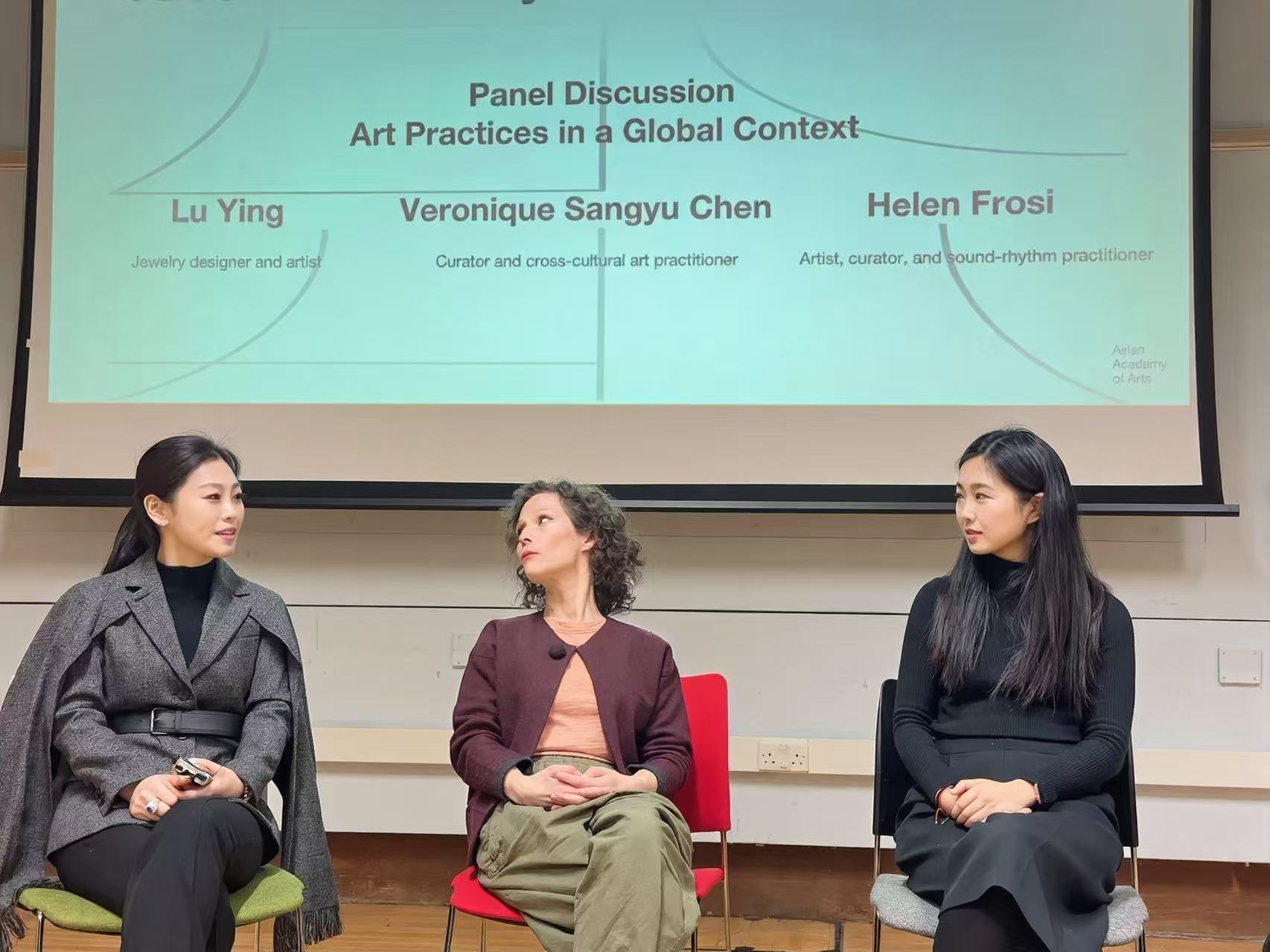
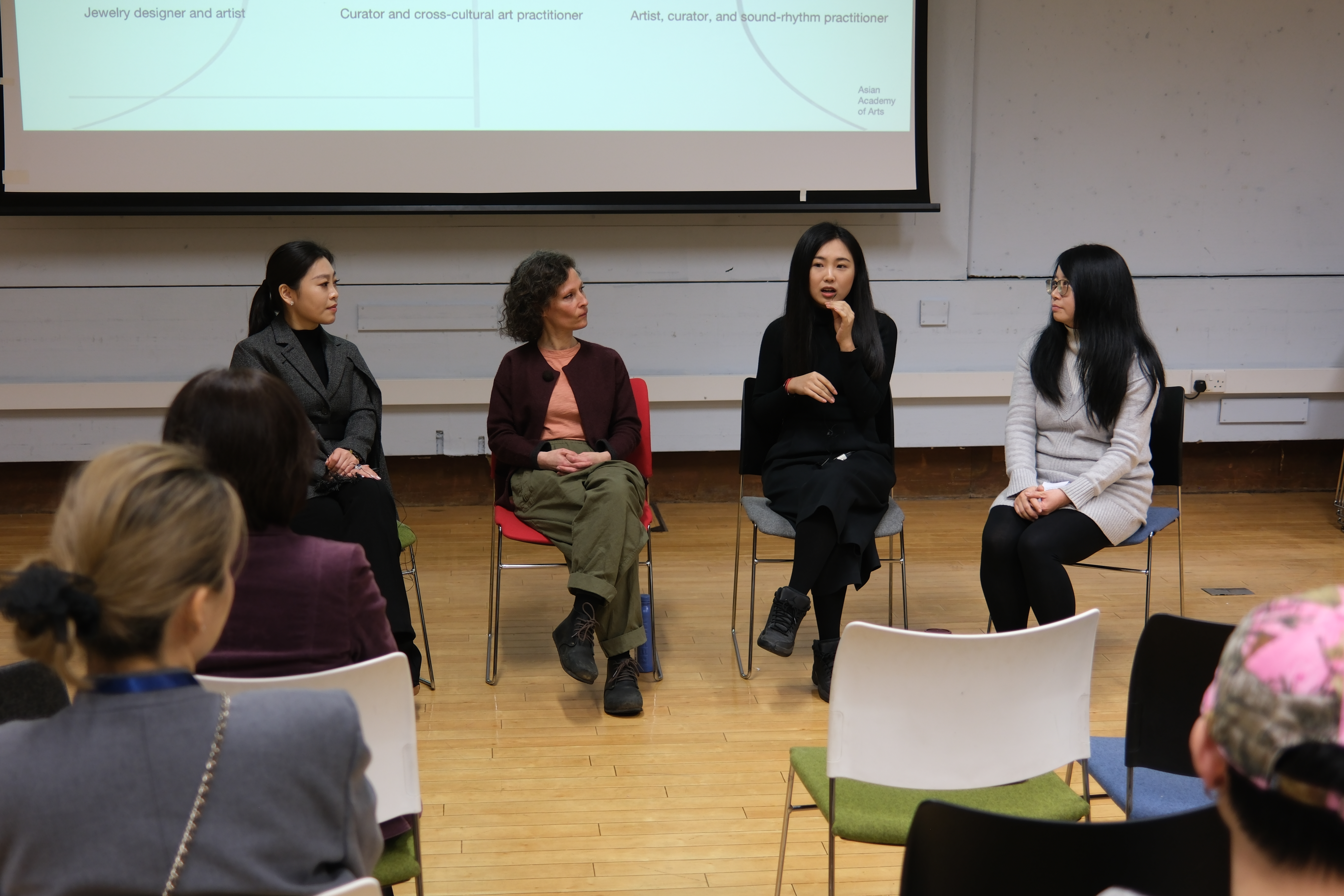
The roundtable Emerging Practices from a Cross-Cultural Perspective was moderated by Sino-British cultural consultant and West Link Consulting founder Vivian Ni, with Helen Frosi, Veronique Sangyu Chen and Lu Ying. The discussion considered how materials carry cultural and lived experience, how artistic practices unfold across different cultural contexts, how identity emerges through practice, and the role of universities, museums and independent platforms in supporting emerging artistic ecologies.
My Contribution: Cross-Cultural Curating through Food, Craft, and Situated Practice
Ni:
Your curatorial practice moves between different cultural contexts in the UK and China. How did food, material and making become important curatorial tools for you?
Chen:
Working between the UK and China gradually shifted my attention from the circulation of artworks to the circulation of working methods.
I became increasingly aware that what travels across cultures is not only objects or ideas, but also habits of making, modes of collaboration and embodied forms of knowledge.
Food and craft became important to me because they create encounters. They move the curatorial question away from “How do we represent culture?” towards “How do we experience and make something together?”
Ni:
In your food-based projects, how do you avoid turning food into a form of cultural representation?
Chen:
I try not to use food as something that stands in for a particular culture or identity. Once it is framed that way, it can easily become illustrative or exoticised.
In Dust and Shapes in London, we removed the conventional dining setup. There were no fixed seats; people moved freely, talked and experienced the space at their own pace. Harp music, poetry and the revealing of each course created changing rhythms of movement, pause and attention.
The dishes deliberately combined different culinary traditions. The point was not authenticity, but the reality of cultural hybridity within migration.
Food therefore became a shared situation: something that gathered people, triggered memory and opened conversations, rather than representing “this culture” or “that identity.”
Ni:
You have also worked with international artist residencies in rural China. What did curating mean in that context?
Chen:
That experience changed how I think about curating.
In a residency, curating becomes less about selecting and arranging finished works and more about shaping conditions: how artists live, adapt to local rhythms, access materials and develop relationships with craftspeople, spaces and communities.
My role therefore became closer to that of a mediator or facilitator. I was thinking about how to balance structure and freedom, while allowing the place itself to become part of the artistic process.
In that sense, curating became a way of designing an ecosystem — one that could accommodate experimentation, friction and unexpected shifts in perspective.
Ni:
Did questions of culture and identity appear clearly from the beginning?
Chen:
Often, they did not. From my observation, these questions emerged through the process. Artists arrived with certain expectations, but their understanding changed through daily experience, new materials, local craft practices, landscape, climate and different rhythms of life.
Identity was rarely a predetermined theme. It surfaced gradually through making, adaptation and, sometimes, moments of discomfort or surprise.
Ni:
Why is process-oriented curating important to you?
Chen:
Because the finished artwork is not the only place where meaning is produced.
How work is made, how labour is organised and how collaborations unfold can be equally significant.
Material, labour and collaboration are not simply technical or logistical conditions. They actively shape meaning.
This is why I have become increasingly interested in temporality, relationships and process rather than treating the final outcome as the sole focus.
Ni:
Does this change the role of the curator?
Chen:
Yes, although I do not see it as simply giving up authorship.
It is better understood as a change in curatorial agency. The curator still makes decisions and carries responsibility, but the work increasingly involves designing conditions, mediating relationships and sustaining processes.
It also means thinking carefully about whose knowledge is prioritised, how labour is structured and how cultural differences are negotiated.
For me, the curator is moving from being primarily the author of a narrative towards becoming a facilitator, coordinator and long-term collaborator.
Ni:
If cross-cultural curating is not simply translation, how would you define it?
Chen:
I see it as a situated, process-oriented way of working.
It is less about transferring stable meanings from one culture to another, and more about allowing meaning to emerge through interaction within specific conditions.
Cross-cultural curating does not need to erase difference or resolve it into consensus. It can instead create situations in which difference can be experienced, negotiated and transformed.
For me, cross-cultural curating has gradually shifted from a subject of research into a methodology for practice.
Forum: Contemporary Practices I: Emerging Practices in Contemporary Art and Jewellery
Date: 28 February 2026
Venue: UCL Institute of Education (IOE), Elvin Hall, London
Organiser: Asian Academy of Arts
Chief Producer: Fang Tingting
Event Coordination: Wen Shaoyue
Academic Advisor: Zhao Jun
Keynote: Lu Ying — Jewellery Today: Material, Body and Cultural Context
Roundtable: Emerging Practices from a Cross-Cultural Perspective
Moderator: Vivian Ni
Panellists: Helen Frosi, Veronique Sangyu Chen, Lu Ying
References & Media
UCL IOE Confucius Institute — Inspiring Language Learning Through Art
Asian Academy of Arts Forum— Asian Academy of Arts Forum Series Successfully Held at UCL London
China Daily — Asian Academy of Arts Forum Series Successfully Held at UCL in London
Express Daily News — Asian Academy of Arts Launches Contemporary Practices Forum in London, Exploring Material, Body, and Cross-Cultural Narratives in Art and Jewellery
Sina News — Asian Academy of Arts Forum Series Successfully Held at UCL in London
AP News — Canada & World Report: Jewellery Artist Lu Ying Speaks at London Contemporary Practice Forum